


Top 10 Safety Tips for 110V Extension Leads

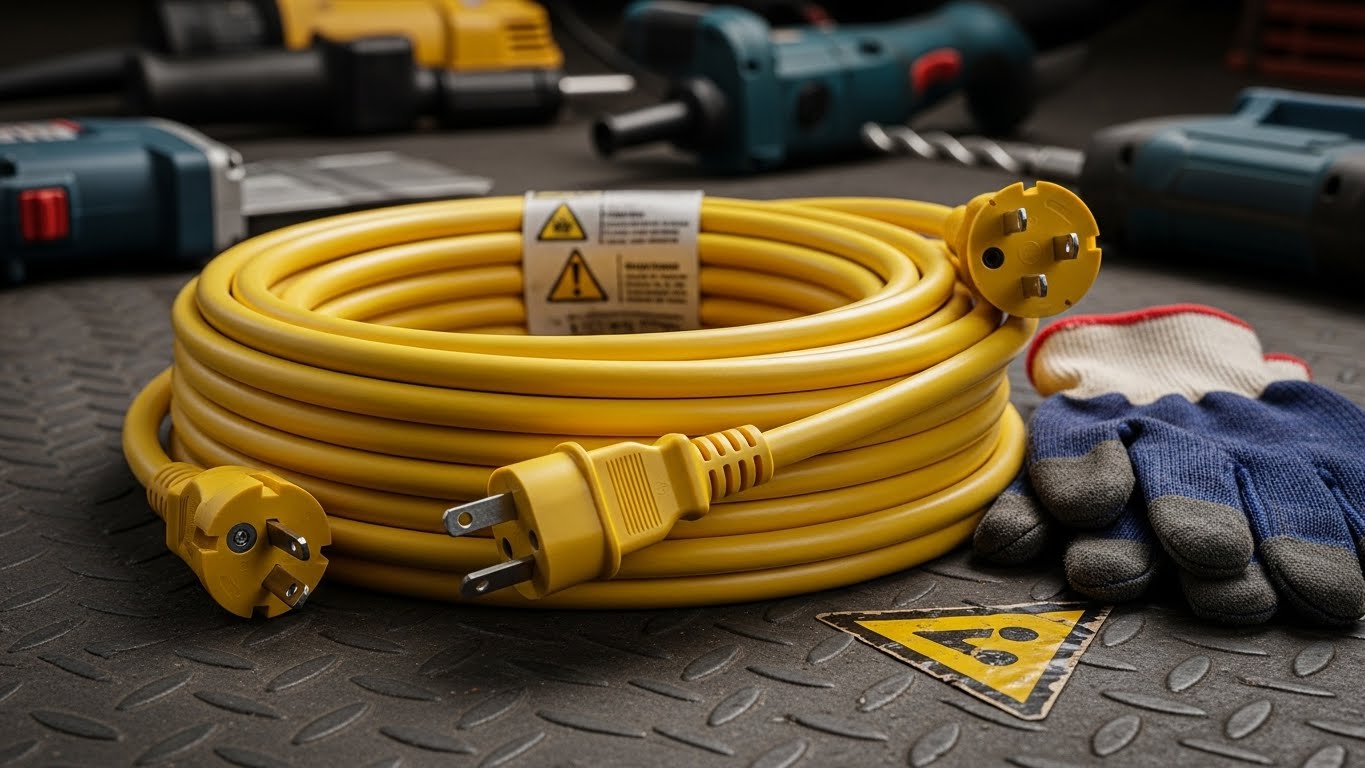
110V extension leads are the UK standard on construction sites because they reduce electric shock risk. However, safe use still depends on correct cable selection, maintenance, and load management.
This guide highlights 10 essential safety extension leads tips for using industrial 110V extension leads safely and correctly.
1. Always Use 110V Systems Designed for Construction Sites
| Aspect | Explanation |
| Recommended system | 110V electrical systems specifically designed for construction sites |
| Key safety feature | Works with centre-tapped-to-earth transformers |
| Voltage to earth | Limited to 55V, significantly reducing electric shock risk |
| Suitable cable type | Industrial 110 volt extension lead |
| Cables to avoid | Domestic or household extension cables |
| Construction-grade benefits | Thicker insulation, robust connectors, higher mechanical strength |
| Best use case | Rough, demanding site environments with heavy tools and frequent movement |
2. Match the Correct Amperage to Your Tools
One of the most common safety mistakes is using the wrong amperage rating.
- Light tools → 16A leads
- Heavy equipment → 110v 32amp extension lead
For example, high-load equipment such as mixers or large saws should never be powered through under-rated cables. A properly rated 110v extension cable prevents overheating and voltage drop.
3. Choose the Right Cable Length (Avoid Excess Coiling)
Cable length directly affects resistance and heat build-up.
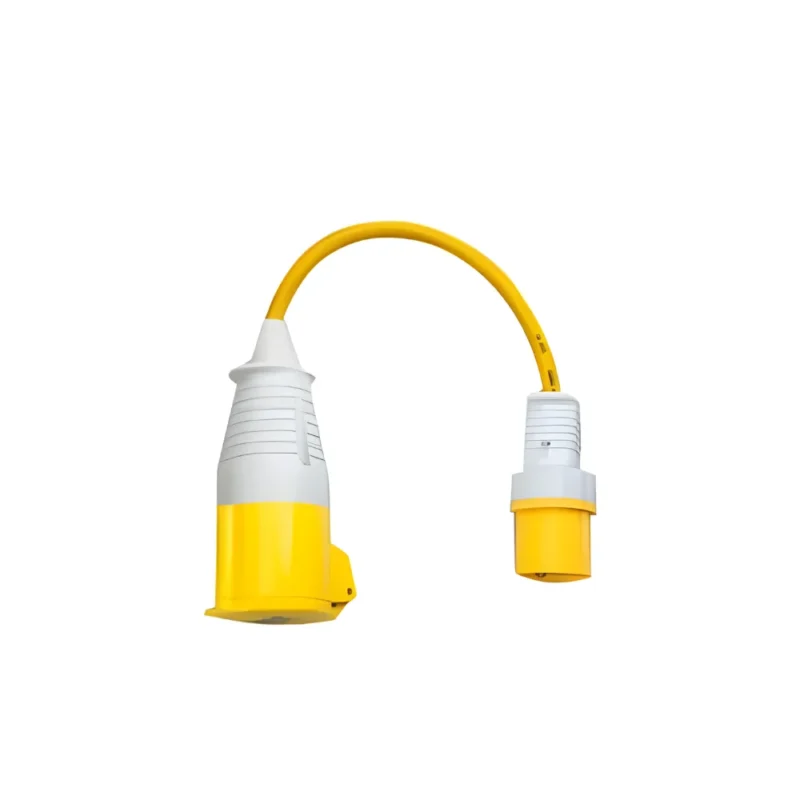
- Short tasks near the transformer benefit from compact leads such as the 110V Extension Lead 0.5m 2.5mm 16amp Plug
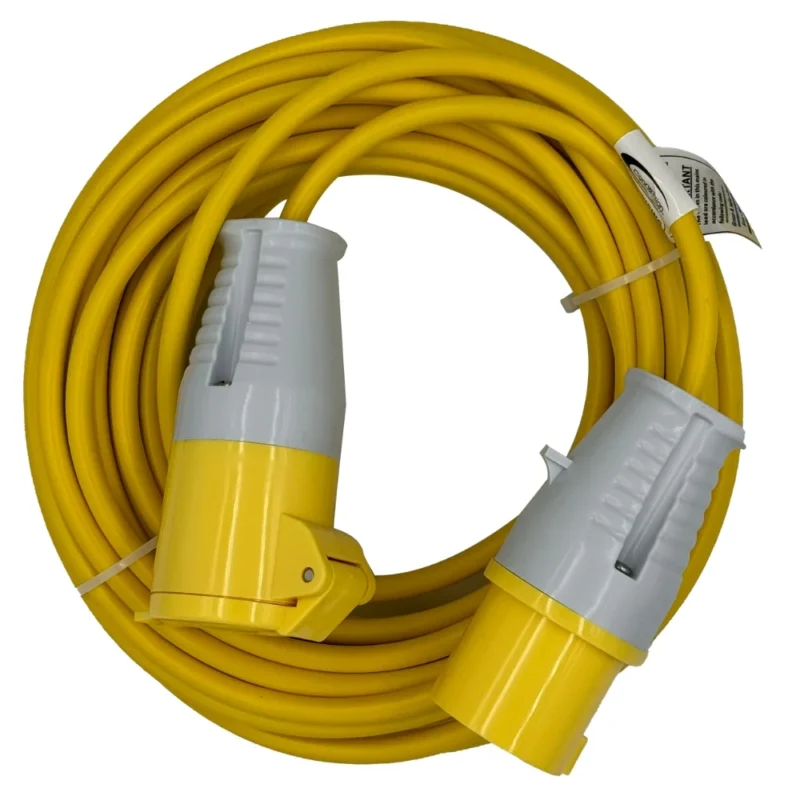
- Mid-range access is ideal for a 110V Extension Lead 14m 1.5mm Cable
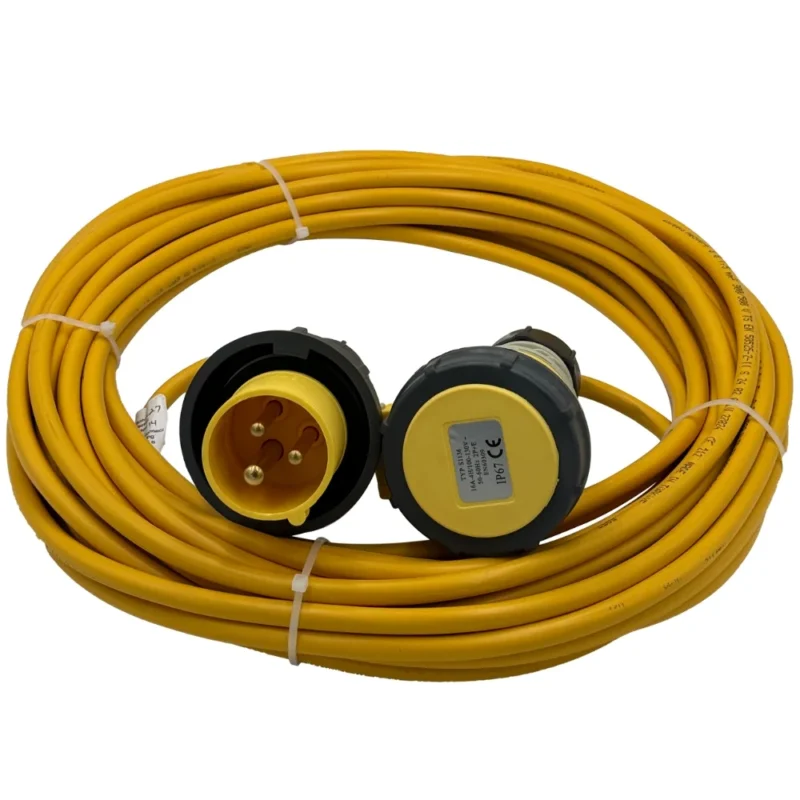
- Large sites may require longer solutions like a 25m 110v extension lead
Never leave excess cable tightly coiled while in use – this can cause dangerous heat accumulation.
4. Inspect Leads Before Every Use
A damaged 110v extension lead is a serious hazard even at reduced voltage.
Check for:
- Cuts or abrasions in the outer sheath
- Cracked plugs or exposed conductors
- Loose or damaged connectors
Remove faulty leads from service immediately. Regular inspections support UK health and safety expectations and reduce downtime.
5. Use Heavy-Duty Cables Rated for UK Site Conditions
A heavy duty extension cable UK rated product is designed to withstand moisture, dust, vibration, and impact.
Look for:
- Industrial-grade rubber or polyurethane insulation
- IP-rated connectors for outdoor use
- Compliance with BS and IEC standards
This is especially important when deploying longer cables like a 110V Extension Lead 25m 2.5mm Cable 32amp, where durability directly affects safety.
6. Protect Extension Leads from Physical Damage
Construction sites are harsh environments. Running a 110v extension cable across traffic routes without protection invites damage.
Best practices include:
- Using cable ramps or covers
- Routing leads overhead where possible
- Avoiding sharp edges and pinch points
Even robust 110v fly lead assemblies can fail if repeatedly crushed or dragged.
7. Keep Connections Off the Ground
Water ingress is a major risk on UK sites. Always keep plug and socket connections elevated to prevent moisture exposure.
Suspended connections reduce:
- Corrosion
- Short circuits
- Unexpected equipment shutdowns
This applies equally to short fly leads and long 110v extension leads.
8. Avoid Daisy-Chaining Multiple Extension Leads
Linking multiple extension leads together increases resistance, voltage drop, and trip hazards.
Instead of chaining:
- Use one correctly sized 110 volt extension lead of the required length
- Upgrade cable thickness for longer distances
For large areas, a single 50m 110v extension lead rated for the correct amperage is far safer than multiple joined cables.
9. Ensure Compatibility with Site Transformers
All 110v extension leads must be compatible with the site transformer output.
Confirm:
- Voltage rating (110V centre-tapped)
- Amperage capacity
- Connector type
Mismatched equipment undermines the safety benefits of 110V systems.
10. Train Workers on Safe Cable Handling
Even the best 110v extension cable can become unsafe if mishandled.
Site training should cover:
- Correct uncoiling techniques
- Proper storage after use
- Reporting damaged leads immediately
Well-trained teams extend cable lifespan and reduce incidents.
Frequently Asked Questions (FAQs)
Why are 110V extension leads safer on construction sites?
They reduce shock severity by limiting voltage to 55V to earth when used with site transformers.
Can I use a domestic extension lead on a site?
No. Only industrial-grade 110v extension leads meet construction safety requirements.
What’s the difference between a fly lead and an extension lead?
A 110v fly lead is usually a short connector cable, while extension leads provide longer reach for powering tools.
Does cable length affect safety?
Yes. Longer cables increase resistance and heat, making correct sizing essential.