

Latest Weekly News
Why UK Construction Sites Rely on 110 V Equipment for Safety

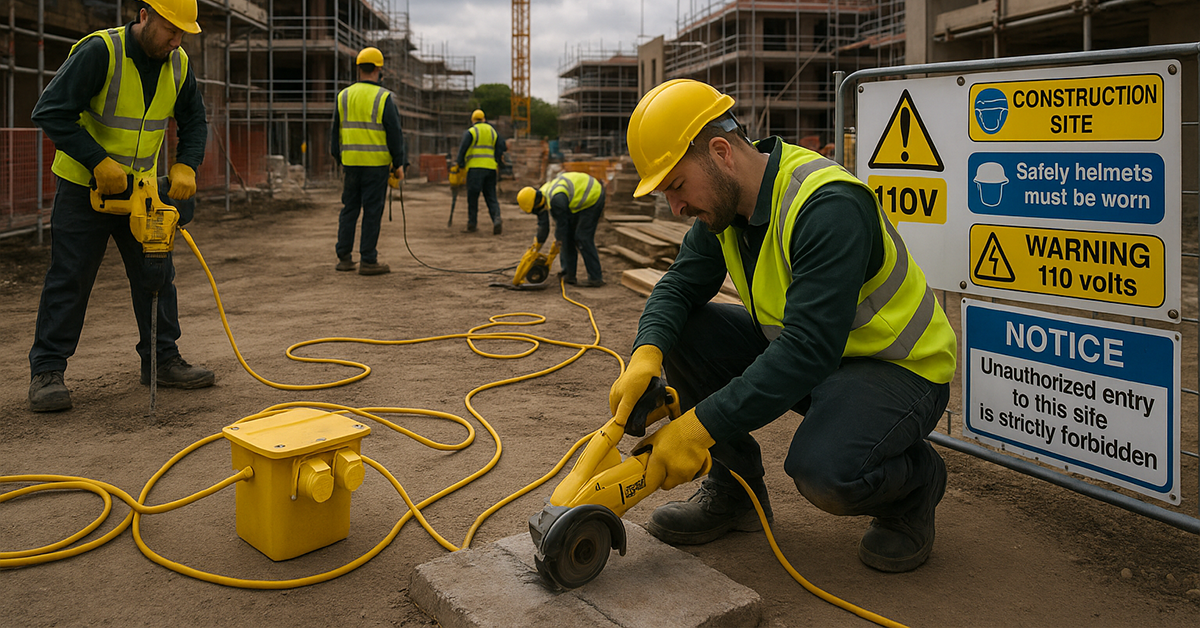
Construction sites are hazardous, so safety is crucial. In the UK, 110 V electrical equipment – standard for tools and lighting – reduces risk compared to 230 V, with suppliers like Connexion Electrical providing reliable solutions.
The UK Regulatory Landscape: Safety by Design
UK law sets a high bar for electrical safety in construction.
- HSE Guidance: The Health & Safety Executive (HSE) strongly recommends limiting supply voltage to 110 V via a centre-tapped earth (CTE) system for site tools and equipment. This reduces the risk of severe shocks in harsh environments.
- Electricity at Work Regulations 1989: Employers are legally obliged to ensure electrical equipment is safe and properly maintained.
- BS 4363 Compliance: This British Standard covers distribution assemblies for 110 V systems, ensuring equipment meets rigorous safety and quality controls.
- PAT Testing Requirements: Portable tools must undergo inspection every 3 months to remain compliant and safe (HSE guidance).
Why 110 V Is Safer: The Centre-Tapped Earth System Explained
| Aspect | Explanation |
|---|---|
| Centre-Tapped Earth (CTE) | 110 V site equipment is split into two 55 V lines to earth. Contact with one conductor exposes a maximum of 55 V, not 230 V. |
| Reduced Fatal Risk | Significantly lowers the chance of fatal electrocution, especially in damp or metallic site environments. |
| Still Powerful Enough | Tools like drills, saws, and breakers maintain performance while offering safer operation. |
| Industry Standardisation | Most professional-grade power tools sold in the UK have 110 V versions specifically for construction site use. |
| Community Insight | “Safety…110 V is actually 2×55 V so it’s safer than 230 V. If you touch one conductor, you’re not exposed to the full risk.” – UK electrician on Reddit |
Practical Use of 110 V on Construction Sites
110 V equipment isn’t just a regulation it’s part of everyday life on site.
- Power Tools: Drills, grinders, saws, sanders, and mixers are commonly 110 V.
- Temporary Lighting: Site floodlights, tower lights, and festoon systems are often 110 V for safer operation.
- Cabling & Distribution: 110 V cable reels, extension leads, and distribution assemblies make it easy to spread power across site zones.
- Transformers: Step-down transformers convert 230 V mains into 110 V for safe tool use.
The system is practical, simple, and familiar to workers, which also reduces training overhead.
Compliance & Inspection: Keeping Sites Safe
Electrical safety doesn’t end with the equipment it’s about ongoing inspection and maintenance.
- PAT Testing: HSE recommends every 3 months for 110 V portable equipment.
- Visual Checks: Workers should inspect cables, plugs, and transformers for damage before each use.
- Site Manager Duties: Construction managers are legally responsible for enforcing safe practices.
- Penalties for Non-Compliance: Failure to maintain safe electrical systems can result in fines, site shutdowns, or even prosecution.
Market Context: Why the UK Sticks with 110 V
While much of Europe relies on 230 V equipment, the UK has chosen a different path for construction and for good reason.
- Historical Context: 110 V systems became standard in the post-war building boom to reduce site accidents.
- Insurance Requirements: Many insurers will not cover a site unless 110 V tools are used.
- Cost vs. Risk: The cost of transformers and 110 V tools is far less than the financial and human cost of accidents.
- Worker Culture: UK tradespeople are accustomed to 110 V, reinforcing its long-term adoption.
Problem and Solution: Ensuring Electrical Safety on Construction Sites
Problem:
Construction workers are at risk of electric shock when using standard 230 V tools on wet or metallic sites, which can lead to serious injury or even death.
Solution:
Using 110 V equipment with a centre-tapped earth (CTE) system reduces the voltage workers are exposed to, lowering the risk of fatal shocks while still powering tools effectively and complying with UK safety regulations.
Industry Insights: Voices from the Field
- Electricians’ View: Many site electricians confirm that 230 V is rarely allowed, and 110 V is universally required for compliance
- Safety Managers’ View: Training often emphasises how 110 V reduces downtime from accidents.
- Future Outlook: Despite new technologies (battery tools, cordless systems), 110 V remains the backbone of UK construction power supply.
FAQs
- Why is 110 V used on UK construction sites instead of 230 V?
110 V is safer because if someone touches a live wire, the maximum shock is much lower than 230 V, reducing the risk of serious injury.
2. What rules require 110 V on sites?
UK laws like the Electricity at Work Regulations 1989 and HSE guidance make sure tools and equipment are safe and properly maintained.
3. How often should 110 V tools be checked?
Portable tools should be tested every 3 months and visually checked before use.
4. What equipment uses 110 V on construction sites?
Power tools like drills and saws, temporary lighting, cable reels, and step-down transformers all use 110 V for safer operation.