

Latest Weekly News
Common Mistakes to Avoid When Using 110V Extension Leads

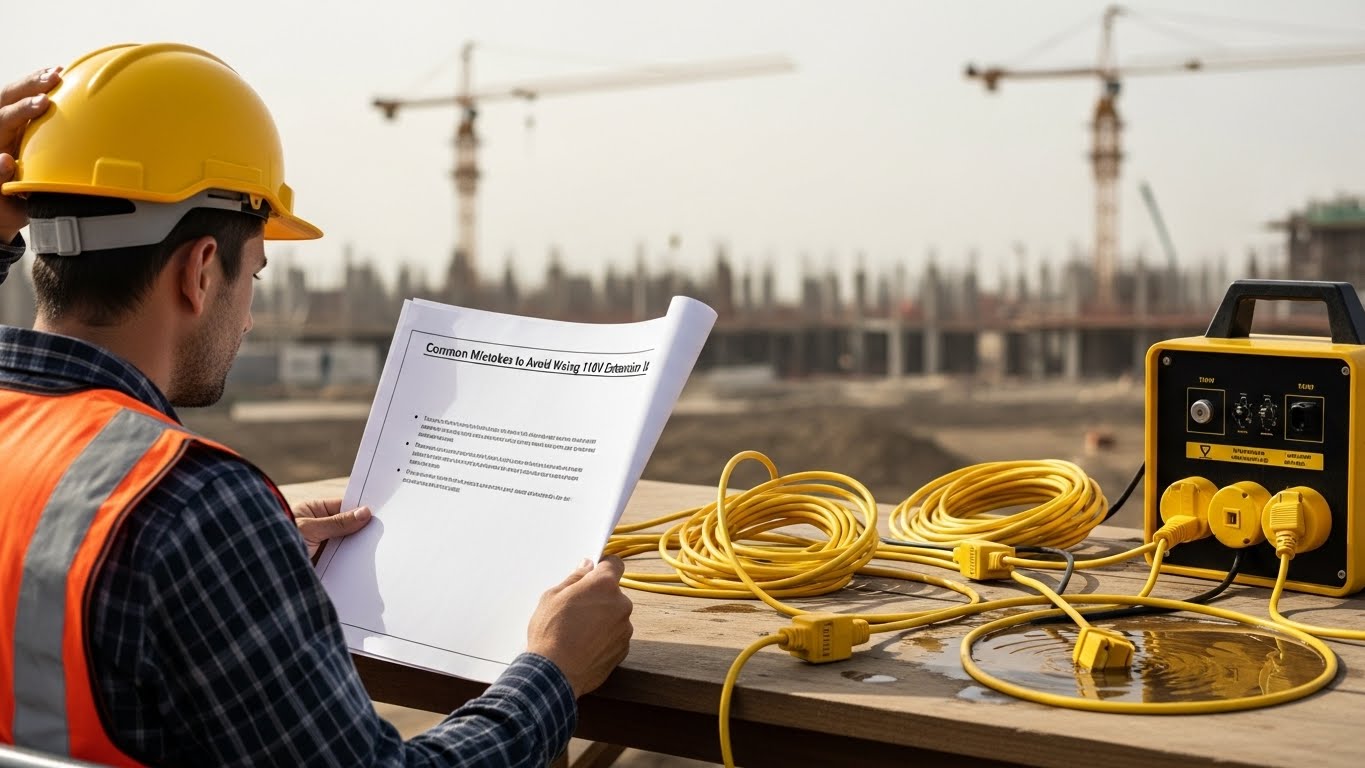
A 110 volt extension lead is a standard piece of equipment on UK construction sites, industrial facilities, and temporary work environments. Designed to work with reduced-voltage systems, 110V extension leads improve safety – but only when used correctly.
Misuse can still lead to overheating, equipment failure, or electrical hazards. This guide highlights the most common mistakes people make with 110v power leads, and explains how to avoid them while staying compliant with extension lead safety UK requirements.
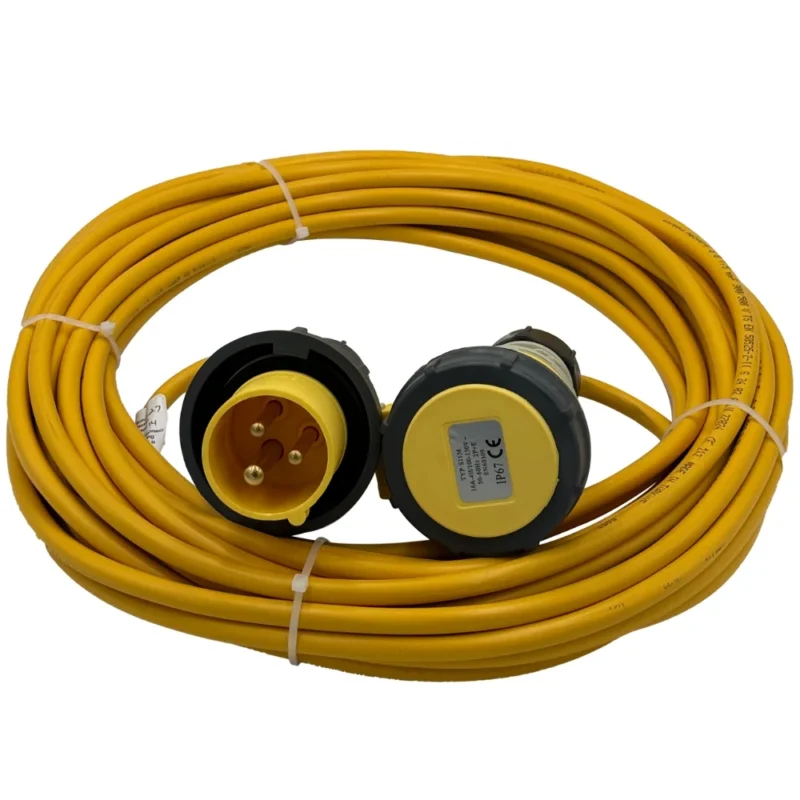
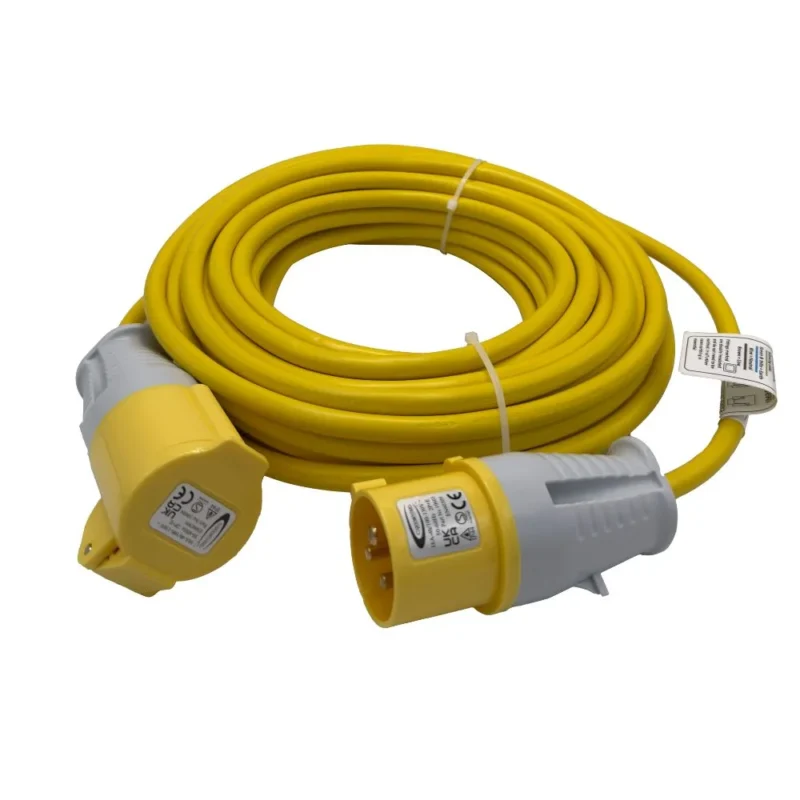
What Are 110V Extension Leads?
110V extension leads are heavy-duty power cables used with centre-tapped 110V systems (55-0-55V). They are commonly paired with site transformers and are widely used in:
- Construction sites
- Industrial maintenance
- Outdoor and temporary power setups
Their lower voltage significantly reduces the risk of electric shock – but they are not risk-free.
Common Mistakes to Avoid When Using 110V Extension Leads
1. Daisy Chaining Power Cords
Daisy chaining power cords – plugging multiple extension leads into one another – is one of the most dangerous and common mistakes.
Why it’s risky:
- Increases resistance and heat build-up
- Raises the risk of voltage drop
- Can overload plugs and sockets
Best practice:
Use a single extension lead of the correct length and rating, or a properly rated distribution board.
2. Overloading the Extension Lead
Every 110 volt extension lead has a maximum current rating (typically 16A or 32A). Plugging in multiple high-draw tools can exceed this limit.
Consequences include:
- Overheating
- Tripped breakers
- Cable insulation damage
Always calculate the total load before connecting equipment.
3. Ignoring PAT Testing Requirements
PAT testing extension leads is a legal and safety requirement in many UK workplaces.
Common errors include:
- Using untested leads
- Missing inspection labels
- Continuing to use failed equipment
Regular PAT testing helps identify internal faults that aren’t visible externally.
4. Using Damaged or Worn Cables
Cuts, crushed insulation, exposed conductors, or damaged plugs are clear hazards.
Never ignore:
- Frayed outer sheaths
- Loose connectors
- Burn marks or discolouration
Damaged 110v power leads should be removed from service immediately.
5. Choosing the Wrong Lead for the Environment
Not all extension leads are suitable for every setting.
Mistakes include:
- Indoor-rated leads used outdoors
- Insufficient IP rating in wet areas
- Thin cables used for high loads
Always matching the extension leads to the site conditions and duty cycle.
6. Poor Cable Management
Trailing cables create:
- Trip hazards
- Mechanical damage risks
- Strain on connectors
Use cable ramps, hooks, or elevated routing to protect both workers and equipment.
Safety Standards and Best Practice in the UK
Extension lead safety UK guidance emphasises:
- Reduced-voltage systems (110V)
- Routine inspections
- Proper load management
- Compliance with HSE and IET recommendations
For a broader overview of general extension lead risks and precautions, see our related guide:
“Safe Use of Extension Leads – What to Pay Attention To?”, which complements this article by covering everyday and site-specific scenarios.
Unsafe vs Safe Use of 110V Extension Leads
| Aspect | Common Mistake | Best Practice |
| Power distribution | Daisy chain power cords | Use correct-length single lead or distro board |
| Load management | Overloading extension lead | Calculate total tool current |
| Testing | No PAT testing | Regular PAT testing extension leads |
| Cable condition | Using damaged leads | Inspect before every use |
| Environment | Wrong IP rating | Match lead to site conditions |
| Cable routing | Trailing cables | Use ramps, hooks, or overhead routing |
FAQs
Are 110V extension leads completely safe?
No electrical system is risk-free. While 110V systems reduce shock severity, misuse can still cause fires, overheating, or equipment damage.
Is daisy chaining extension leads illegal in the UK?
It’s not always illegal, but it violates best practice and is strongly discouraged under extension lead safety UK guidance.
How often should 110V extension leads be PAT tested?
Frequency depends on usage and environment. On construction sites, PAT testing is often required every 3 months or according to site rules.
Can I use a standard household extension lead on a 110V site?
No. Only site-rated 110V extension leads with appropriate connectors and ratings should be used.